Insurance alternative accommodation across the UK
Professionally managed furnished accommodation for households displaced from their home after fire, flood, escape of water or other insured property damage. We work to instructions from insurers, loss adjusters, relocation providers and organisations arranging accommodation on a household's behalf, sourcing property that fits the household's actual requirements.
What is insurance alternative accommodation?
Insurance alternative accommodation is temporary accommodation arranged when a household cannot occupy their normal home following an insured event or property damage. It is sometimes called decant or displacement accommodation, and it normally stays in place until the property can be lived in again.
What counts as suitable accommodation depends on the household and the circumstances: how many people are displaced, how long works are expected to take, where they need to be, and what practical needs they have. Two claims in the same street can call for very different properties.
MJ3 Relocations is an accommodation provider, not an insurer or a claims handler. The decision to arrange accommodation, and the basis on which it is arranged, sits with the insurer, loss adjuster and the professionals assessing the property. We do not assess claims, interpret policies or advise on cover.
Property damage that makes a home unsuitable to occupy
Most requirements reach us after one of the following. Whether a property is unsuitable to occupy is a judgement for the adjuster, surveyor and contractor, not for us.
Fire and smoke damage
Fire, smoke or heat damage that leaves a property unsafe or unsuitable to live in during repairs.
Flood
Internal flooding or storm water ingress affecting floors, services or the habitable parts of a home.
Escape of water
Burst pipes, tank failures and leaks that damage ceilings, floors or essential services.
Significant property damage
Structural damage, impact damage or subsidence works that mean the household cannot remain in place.
Other insured events can have the same effect where services, safety or habitable space are affected. If you are unsure whether we can help with a particular situation, send us the requirement and we will tell you honestly.
Who instructs us
We take accommodation instructions from the professionals managing a displacement. Each has a slightly different problem to solve.
Insurers
Claims teams that need a household placed in suitable furnished accommodation while a damaged property is repaired, with one contact handling the accommodation itself.
Loss adjusters
Adjusters who have assessed a property as unsuitable to occupy and need practical accommodation options that fit the household rather than a generic hotel booking.
Relocation providers
Providers managing a caseload who need additional sourcing capacity in a particular area, or property types their usual stock does not cover.
Claims and assistance teams
Teams coordinating a claim who need household requirements captured properly and accommodation details confirmed in writing.
Organisations arranging accommodation
Housing, welfare and property teams arranging temporary accommodation for a displaced household on someone else's behalf.
Arranging accommodation for a project team instead? See contractor and workforce accommodation or our wider business accommodation solutions.
What shapes suitable accommodation
These are the factors we work through before searching. Not every requirement can be met in every area, so we are clear about what is realistic before options are put forward.
Occupants and bedrooms
How many people are in the household, and how many bedrooms and how much living space they realistically need.
Location
Preferred area, and whether the household needs to stay near the original home, schools, work or family.
Dates and duration
Required move-in date and how long the accommodation is expected to be needed while works progress.
Parking
Whether off-street or allocated parking is needed, and for how many vehicles, where available.
Accessibility
Step-free access, ground-floor bedrooms, bathroom requirements or other access needs.
Pets and children
Pets that need to stay with the household, and the ages of any children living at the property.
Home working, proximity to family and school runs all matter too. Where a requirement cannot be met in the preferred area, we explain the trade-offs rather than putting forward an unsuitable property.
What the properties typically offer
Properties differ, so features are confirmed for each placement before the stay is agreed rather than assumed.
Furnished homes
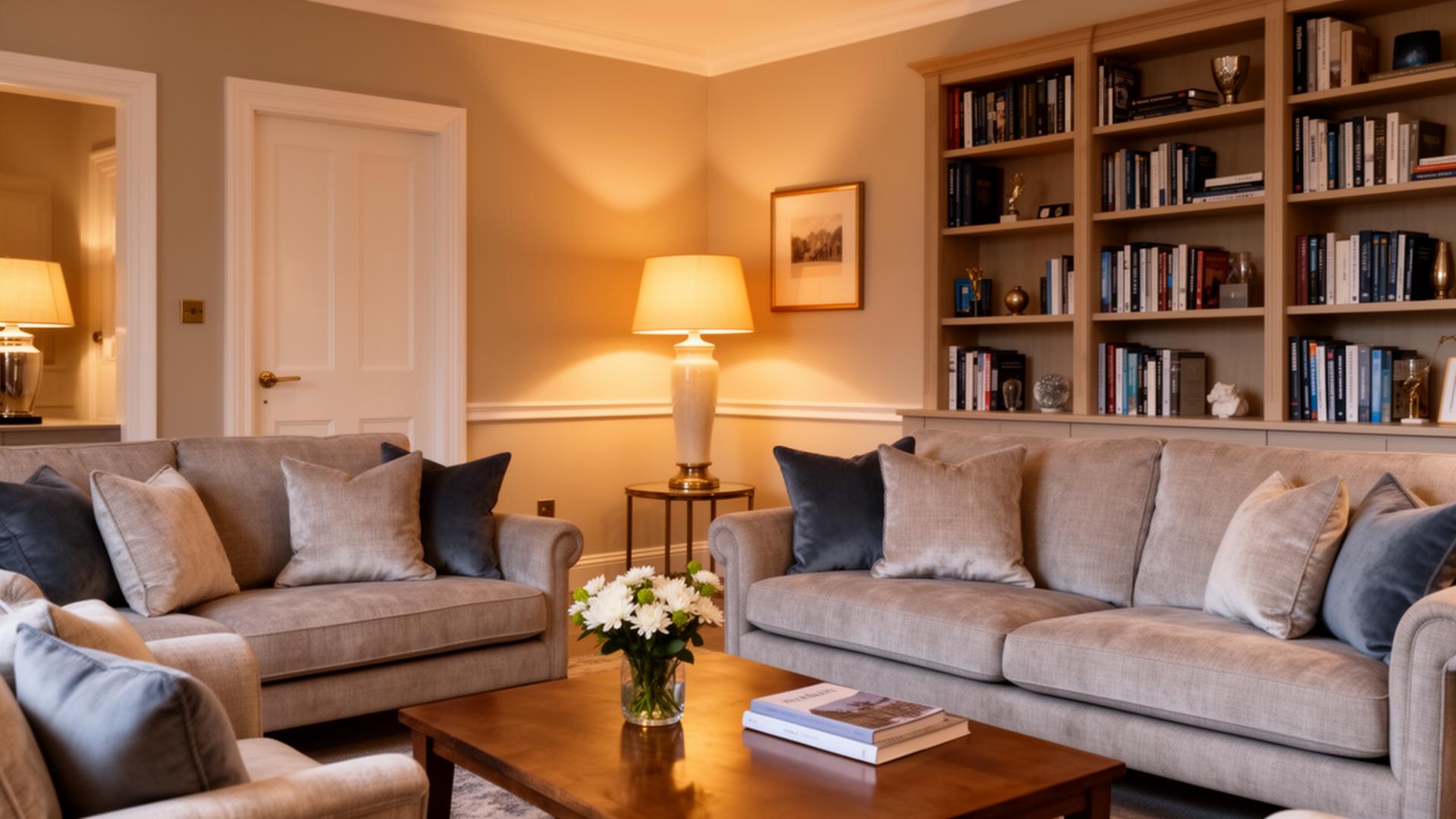
Houses and apartments furnished and equipped for living in, rather than a single hotel room.
Kitchens
Self-catering kitchens so a household can cook and eat normally throughout the stay.
Laundry facilities
Washing facilities in the property in most cases, which matters over a longer temporary stay.
Wi-Fi
Broadband in the property where the connection allows, supporting home working and schoolwork.
Parking where available
Off-street or allocated parking where the property and area allow it; this varies by location.
Living space
Separate living and sleeping areas, so a family is not confined to one room for weeks at a time.
Living normally while the property is put right
A hotel room can work for a night or two. Over the weeks a reinstatement programme often takes, a displaced household needs somewhere they can cook, do laundry, sit together in the evening and put children to bed in their own room.
Furnished houses and apartments give a family separate living and sleeping space, a kitchen and, in most cases, laundry facilities. That tends to make a longer temporary stay considerably easier to live with, and reduces the day-to-day friction that otherwise finds its way back to the claim.
Cost depends on the property, the area and the length of stay, and we do not claim it is always cheaper than a hotel. What we do say is that for a household displaced for more than a short period, appropriate accommodation is usually more practical.
Accommodation support from instruction to move-out
Requirements captured properly
We take the household details from the instructing party and confirm what is actually needed before searching.
Sourcing and suitability
We look for available property that fits the household and the location, and say plainly when something is not realistic.
One point of contact
A named contact for the instructing party and for the household while the accommodation is in place.
Extensions and changes
Where works run longer or requirements change, we handle it against the agreed terms and availability.
Support during the stay
Practical issues with the property are dealt with during the placement rather than passed back to the claim.
Written confirmation
Property details, costs and terms confirmed in writing with the instructing party before the stay begins.
An accommodation partner, not a claims handler
MJ3 Relocations sits alongside the claims process rather than inside it. You keep the claim, the policy and the authorisation. We take on the accommodation work: obtaining the household requirements, sourcing options, considering location and practical needs, confirming suitability, arranging the stay, and staying available for accommodation matters while it runs.
- Household requirements captured properly
- Options reported honestly, including what is unrealistic
- Property, costs and terms confirmed in writing
- Extensions handled against the agreed terms
Extra sourcing capacity where you need it
Relocation and assistance providers usually have the case management covered. What tends to be harder is finding the right property in a specific area at short notice, particularly for larger households, pets or accessibility requirements.
We can work behind an existing provider on individual placements: sourcing and managing the accommodation while you retain the client relationship and the case. Our role stays with the property, not the claim. More about how MJ3 Relocations works.
From instruction to move-in
The same sequence applies whether the instruction comes from an insurer, an adjuster or a relocation provider. See how our service works for the wider process.
- 1
Accommodation requirement is provided
The insurer, adjuster, relocation provider or organisation sends the requirement, including the claim location.
- 2
Household needs are understood
We establish occupants, bedrooms, dates, parking, pets, accessibility and any location constraints.
- 3
Suitable options are sourced
We search available property that fits those requirements and report honestly on what the area can support.
- 4
Preferred accommodation is confirmed
Property details, costs and terms are agreed and confirmed in writing before anything is committed.
- 5
Move-in and stay are coordinated
Access, check-in and practical arrangements are coordinated with the household and the instructing party.
- 6
Ongoing support is provided
We remain the contact for the property during the stay and handle extensions where they are agreed.
What helps us assess a requirement
A claims handler, loss adjuster or relocation professional sending the following gets a more accurate answer, and fewer questions back.
- Address or area of the damaged property
- Number of occupants in the household
- Bedrooms and living space needed
- Preferred area, and anything the household must stay near
- Required move-in date
- Expected duration while works are carried out
- Pets, and any restrictions to be aware of
- Parking requirements, including number of vehicles
- Accessibility or medical requirements
- Who to invoice and any reference the placement needs
When requirements change
Temporary accommodation rarely runs exactly to plan. Reinstatement works slip, dates move and household circumstances change during the stay.
Extensions, revised dates and changed household requirements can usually be handled subject to availability and the agreed terms. Where the current property can no longer work, we look at alternative options and flag the position early rather than late.
Alternative accommodation questions
What is insurance alternative accommodation?
Insurance alternative accommodation, sometimes called decant accommodation, is temporary housing arranged when a household cannot occupy their normal home following an insured event or property damage. It is usually arranged through the insurer, loss adjuster or a provider acting on their behalf, and continues while the property is repaired. What is suitable depends entirely on the household and the circumstances.
When is alternative accommodation needed?
It is normally needed when a property has been assessed as unsuitable to live in, most often after fire, flood, escape of water or other significant property damage affecting safety, services or habitable space. Whether accommodation is arranged, and on what basis, is decided by the insurer, loss adjuster and the professionals assessing the property, not by us.
Who can arrange alternative accommodation?
We take instructions from insurers, loss adjusters, claims and assistance teams, relocation providers and organisations arranging accommodation on a household's behalf. MJ3 Relocations sources and manages the accommodation; we do not assess claims, interpret policies or decide what is covered.
Can you help after fire or flood damage?
Yes. Fire, flood and escape of water are the most common reasons we are contacted. We source furnished property suited to the household and the expected length of the stay, subject to what is genuinely available in the area at the time.
Can you accommodate families?
Family placements are a core part of this service, including households with children, pets or particular access needs. We look for properties with the bedrooms and living space a family needs, though options in any given area are always subject to availability.
Is the accommodation suitable for longer temporary stays?
The property types we source are intended for living in rather than short hotel stays, with separate living space, a kitchen and, in most cases, laundry facilities. That generally suits stays that run through a reinstatement programme.
What information do you need to arrange accommodation?
The location of the damaged property, the number of occupants, bedrooms needed, the required move-in date, the expected duration, and details such as pets, parking and accessibility. Knowing who to invoice and any claim reference helps us set the placement up cleanly.
Can accommodation be located close to the original home?
We always try to keep a household close to their home, schools, work and support network, because that is usually what matters most. How close is realistic depends on the property available in that area at the time, so we set expectations before options are put forward.
Can requirements change during the stay?
Yes, and they often do as repairs progress. Extended dates, changed dates and revised household requirements can usually be accommodated subject to availability and the agreed terms. Where a move becomes unavoidable we flag it as early as possible.
Where in the UK do you source accommodation?
We source across the UK and hold the most local knowledge in the cities listed on this page. We do not claim availability in every location; where an area is difficult we say so rather than leaving a placement uncertain.
Where we hold the most local knowledge
We source across the UK. These are the cities where we know the local property market, parking realities and travel routes best. Availability in any location depends on what is on the market at the time.
Send us an accommodation requirement
Include the location, the household, the required move-in date and the expected duration, and we will come back with what is realistic in that area.